|
From:TheBahamasWeekly.com Bahamas Information Services Updates
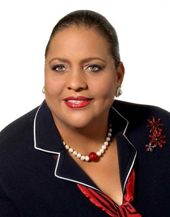
Mrs. Loretta Butler-Turner was adamant, however, that the under-representation of women in electoral politics is a matter for the private citizen as well: political parties cannot run women if no women come forward as potential candidates. Gender stereotypes and traditional roles must be dealt with if more women are to be elected to parliaments, and governments cannot be the only parties to the necessary national debate. “In civil society, women have got to become engaged,” Mrs. Turner said. And even in instances when women do hold elected office, Minister Butler-Turner questioned the motivations behind assigning women to what some see as “soft-core” ministries, rather than admittedly tough assignments. “We’ve got to move past that,” Mrs. Turner said. The institution of gender quotas was a major theme at the Hemispheric Forum on women’s leadership held at the Organisation of American States in April. Participants considered reform of electoral systems around the region, with at least one prominent Caribbean scholar among those urging for the implementation of a quota system as part of a systemic overhaul. More and more countries are introducing gender quotas for public elections. According to The Quota Project Global Database of Quotas for Women – a collaboration of the International Institute for Democracy and Electoral Assistance, Inter-Parliamentary Union and Stockholm University – fully half of the countries of the world today use some type of electoral quota for their parliament.
The www.quotaproject.org/ Quota
Project defines electoral quotasas mandatory or targeted percentages
of women candidates for public elections. Such an electoral quota for women may
be constitutional, legislative or be in the form of a political party quota,
and may apply to the number of women candidates proposed by a party for election,
or may take the form of reserved seats in the legislature. The rate at which the number of women in politics is growing is considered too slow by many observers and participants, and has consequently led to more frequent and insistent calls for more efficient methods reach what the Quota Project terms “a gender balance in political institutions.” Quotas present one such mechanism. Women from around the region were in Washington for the Hemispheric Forum “Women’s Leadership For A Citizen’s Democracy,”. Speaking at the forum organized by the Organisation of American States, the United Nations and other international agencies, University of the West Indies lecturer Cynthia Barrow-Giles remarked that universal adult suffrage was achieved for most of the Caribbean by1951. The Bahamas, she noted, achieved universal adult suffrage in 1962, and has progressed in women’s participation in politics since then. Among the issues surrounding women’s political participation, Ms. Barrow-Giles, Senior lecturer in politics at UWI, cited the view that women did not constitute a political group. She added that campaign financing was a constraint for women being electoral candidates for political office, and called for substantial systematic reform. Ms. Barrow-Giles recommended that electorate financing be tied to a quota system to increase women’s political participation. Quota Activity In The Region Guyana has a legislated candidate quota for its parliament: 30 percent of the candidates for election must be women, or according to the Representation of the People Act, Section 14 & 17, the list cannot be approved. The law reads: “If the list does not comply with the quota, the Commission shall notify this and allow the party to rectify it. Only when deemed correct by the Commission, can the list be approved.” While the quota system in Guyana was applauded in some quarters, it is still a matter of discussion within Guyana. In March 2011, as Guyana observed the 62nd Anniversary of Commonwealth Day, University of Guyana Students hosted a debate competition focusing on whether the quota system has significantly benefited women in Guyana and other Commonwealth countries. In the Dominican Republic, the 1997 Law 275 imposed a 25 percent quota for women among candidates for elective positions. Post-election negotiations in 1998 resulted in a guarantee that women's representation at the national level would not be less than 25 percent of the total number of seats for both Houses of Parliament, independent of electoral classification. In 2000, amendments to the electoral law increased the quota provision to 33 percent, and included rank-order rules and sanctions, and a 50 percent quota for the municipal level was introduced. Also, at the party level in the DR, the HYPERLINK "http://www.prd.org.do/" Dominican Revolutionary Party (PRD) adopted a 33 percent quota for women on the electoral lists in 2004, and the Social Christian Reformist Party (PRSC) adopted a similar quota in 2005. And in Trinidad and Tobago, while there is no quota mandated by statute or constitution, the issue has clearly been a part of the national debate. In 1995, the Women's Political Platform lobbied the political parties to ensure at least 30 percent women were elected to parliament. In 2000 Independent Senator Diana Mahabir-Wyatt filed a motion in the Senate calling on the government to pass legislation to ensure that all political parties be required to select as many women as men as candidates for national elections. It was unsuccessful. Hemispheric Considerations Also at the meeting, Ana María Yañez, Manuela Ramos Movement Advisor on women’s political rights, recommended that quotas be put into the constitution of every country, which will obligate political parties by way of national law. She said the institution of quotas mandating at least 30 percent representation – instituted in many Latin American countries – has not yet borne the fruit of wider gender representation. Furthermore, Ms. Yañez mentioned that there were legal issues regarding gender equality, particularly as the legal requirement of equal treatment could be seen to be flouted by uneven political representation. Ms. Yañez stressed the need to for a change in the community mentality towards participation of women in order to change politics. New paradigms need to be created.
|
 Washington, DC