|
From:TheBahamasWeekly.com Bahamas Information Services Updates
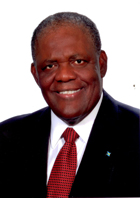
Remarks By The Right Hon. Hubert A. Ingraham Prime Minister and Minister of Finance Commonwealth of The Bahamas At Bahamas Business Outlook 2011 Introduction I am pleased for the opportunity to speak to you and to share information on the state of the economy and our prospects for the future. I will also share with you my Government’s thinking on the role that we play, through policies and initiatives, in providing an environment favorable to the strengthening and diversification of our national economy. Sound fiscal management is, of course, critical in this regard. The Economy over The Past Year The Bahamian economy over the last 12 months continued to labour under the weight of the residual effects of the global economic and financial downturn, though to a lesser degree than in the previous year. Buoyed by the modest growth in the global economy, domestic economic conditions stabilized during 2010. The better performance last year mainly reflected improvements in the key tourism sector, particularly in the high-value stopover segment of the market. In contrast, consumer spending remained relatively weak, and output in the construction sector was constrained by muted levels of foreign investment inflows. In the external sector, the estimated current account deficit narrowed, due primarily to higher tourism earnings, while the surplus on the capital and financial account declined, reflecting a decline in direct investments and reduced public sector inflows. While there are no official employment statistics for 2010, I will say that although some anecdotal evidence exists to suggest a marginal improvement in the unemployment situation, it is a painful fact that unemployment in the country remains far too high. Domestic Economic Prospects I am pleased to advise that there is every expectation that 2011 will see marked improvement. We anticipate that our economy will grow between 2% and 2.5% this year. This turnaround will result from:
We therefore anticipate that unemployment will decrease this year but more significantly in the following year. I should acknowledge, however, a possible cloud on the horizon. Economists are predicting that crude oil prices will trend upward this year, surging from about $80 per barrel to about $106 per barrel by July. This trend has obvious implications for the price of gasoline, the cost of electricity, the current account, the Government's fiscal operations and the broader economy. It is a trend that we will watch closely and we will seek to take appropriate measures to minimize the financial fallout. Such measures relate to adopting various conservation measures to minimize cost, something that both business and individual households should also do. Diversification
I now turn to the subject of your Business Outlook – Diversification of the Economy. It seems to me that the discussion around diversification arises from our desire to see this economy achieve higher levels of growth and perhaps more importantly, to become less vulnerable to shocks in the global economy. For many, tourism leaves us too open to the vagaries of international economic fluctuations. The discussions also reveal a preference on the part of some for our having more of a manufacturing and agricultural base to our economy. Diversification then seems to be defined as less dependence on tourism and financial services (both services) and more involvement in manufacturing (industry) and agriculture. The desire for higher growth and greater resilience is a legitimate one and is certainly one that my Government shares. However, the strong legitimate desire must be considered in the context of the reality of The Bahamas. To be clear, The Bahamas has many of the primary, secondary and tertiary industries found in almost every country in the world, particularly the advanced and developing countries. We have primary industries such as farming, fishing, and some mining (aragonite); secondary industries such as manufacturing (both local and international); and tertiary industries such as tourism and financial services. We can have more. What is true is that services dominate our economy even more than they dominate most of the more advanced and higher income developed economies. An examination of the world’s most developed, high income and high wage economies will show that they are predominantly service-based (between 60% and 75%), with industrial sectors of some 15% to 25% and small agriculture sectors of less than 5%. These economies hardly have a balance between their services, industrial and agricultural sectors, if that is what some mean by diversification. The Bahamian economy, which is about 84% service based, 15% industrial based and about 1% agriculture based has a similar although higher imbalance. An examination of the world’s fastest growing economies will reveal that most are dominated by an industrial base (as much as 73% of GDP), or have large agriculture sectors (as much as 60%) and relatively small service sectors (averaging 37%). Here again, their profiles do not reflect a balance among economic sectors, if this is what diversification means. What is true of virtually all of these countries is that they have low GDP per capita relative to the economies dominated by services. Indeed, many are extremely low-income, low-wage countries, which explains why their economies are still dominated by manufacturing and agriculture. If one looked back at the profiles of today’s most developed economies as they were some 100 years ago, it would be seen that their profiles were much like the profiles of the high growth-rate emerging economies we see today. They were dominated by industrial and agricultural sectors, were low income and high growth economies. As they matured, they became more service-based, higher income and relatively slower, though sustained, growth economies. It is very likely that the emerging economies we see today, as they develop, will follow a similar path and will eventually become more and more service-based, with lower levels of growth and less dependence on their industrial and agricultural sectors. In The Bahamas there seems to be an impulse to diminish the resilience of tourism as an economic sector, as well as a failure to recognize the opportunity for diversification which exists within the sector itself. The reality is that the remarkable growth and development we have achieved through services present huge opportunities for further integration of the 7.5 billion dollar economy of The Bahamas by adding value and exploiting natural resources. Certainly, some of our best prospects for the expansion of agriculture and fisheries lie in their link as food suppliers to our hotel sector and to the domestic market. One of the earliest and most negative effects of the global recession was the high increase in food prices. The loss of farmland in other countries and the advances made in irrigation, fertilization and distribution make it possible for Bahamian farms to supply Bahamian markets more reliably and competitively. Our tourism industry is a natural outlet for a well-organized consistent production of the abundant variety of fruits and vegetables grown in the Bahamas. The productivity of our waters and our fishermen produce an abundance and variety of product that similarly compel a more integrated approach. The Bahamas could become the seafood capital of the Caribbean. The development of the dive industry in our country could not have happened were it not for the clients provided from tourism. In one of the most remote parts of my own constituency, Grand Cay, visitors come from as far away as Germany and stay in a small guest house in the middle of the settlement for the sole purpose of diving. This is true for any number of other nascent businesses employing Bahamians around our country. We in the Government have long encouraged and promoted, through policy and incentive legislation, a deepening of the local value added to our tourism sector, specifically in the area of sourcing of goods and services. Examples are: food (fisheries, agricultural produce and condiments), furnishing and finishes (mattresses, pillows, linen and drapes), and the manufacture of uniforms. Initiatives now underway under the auspices of the Ministry of Agriculture and Marine Resources and the Bahamas Agricultural and Industrial Corporation continue to augment our output and enhance future prospects. Special emphasis must now be placed on ensuring that the quality of the locally-produced goods are of the standard and level expected, indeed demanded, by the clientele of our hotels and by Bahamians. Opportunities for diversification also abound in non-hotel related leisure and entertainment offerings including gourmet eating experiences, for example. It should not be lost on us that the vast majority of fine dining experiences in The Bahamas are still connected to major resorts. This is not the case in Barbados, a competitor warm weather tourism destination in our region. Similarly, opportunities exist for wider retail distribution of reasonably priced, quality straw, shell and turned-wood products, another area where some of our regional competitors have made tremendous strides. These products, readily seen at specialty arts and craft fairs, deserve wider and more convenient availability to the broader tourism and domestic trade. All these segments of our economy are ripe for growth and expansion with measurable benefit toward increased diversification in our economy. Tourism is one of the fastest growing economic activities globally and this growth has been consistent over the years. Furthermore, it must be borne in mind that the circumstances or situation which undermines or diminishes the performance of tourism will likely have the same effect on most other economic activities at the same time. Bear in mind, too, that the major industrial economies have been benefitting from a huge tourism sector long before the island economies recognized the enormous potential for economic growth that travel represented. In the industrial world they called it “invisibles”; they have benefitted substantially from the contribution this activity has made to their economies. Most other economic activities do not offer any greater resilience than tourism, and given the continued potential for growth and diversification still provided by tourism activity, it seems quite reasonable that we should continue to devote our scarce resources toward the maximizing of growth in this industry. I note these observations to make this point: it should be the desire of any government to see as many types of economic enterprises and sectors develop in its economy as its resources can promote. There should never be a hold by the government on the creativity and innovation of the entrepreneurs in its society. However, the extent to which creativity and innovation occur will largely depend on the ambitions, capabilities and pursuits of the entrepreneurial community itself.And, to the extent that businesspeople pursue various forms of enterprise in the society is the extent to which the economy will take on the profile of those pursuits. The Government, working with the business community, might incentivize, promote and facilitate such pursuits but ultimately it is the entrepreneurs that make the actual economic enterprise or sector a reality. In this regard, I note that the use of indigenous material to reduce our carbon foot print, expand opportunities and conserve foreign exchange are compelling reasons to increase the domestic supply of aggregate, improve quality control and add more local content to the construction of buildings, roads and docks. Our forests are a compelling and alluring example of historical Bahamian self-sufficiency. Today the agenda should be to develop sustainable industries that enhance our way of life, improve outdoor recreational infrastructure (boardwalks, benches, decks, gazebos). The opportunities exist. My Government has always seen itself as a facilitator of business, and to the extent that we have adopted this posture, we have promoted more diversification of the Bahamian economy than has been seen since the 1960s. For example, prior to the 1990s there was no private media sector, no container transshipment and no ship care facilities as is the case in Freeport, Grand Bahama; no public securities trading, no competitive telecommunications, no cable services, and no fast ferry services in The Bahamas. Two decades ago bonefish lodges and domestic handicraft were shadows of what they are today. In each of these areas we still have much potential for growth. And, the second home market is being robustly developed with many high-end communities not just in New Providence and Grand Bahama but around our country in Abaco, Bimini, the Berries, Eleuthera, Exuma and Cat Island It is no accident that among economies of similar size and comparable endowment some grow and prosper while others stagnate. We believe there is an infrastructure which encourages and facilitates development and growth, and it has been one of the principal objectives of my Government to create that infrastructure. Such an infrastructure involves many elements. Notwithstanding what we have done in times past, we continue to move aggressively to create that total environment in which business development and economic prospects flourish. We have:
In short, we can do more, much more, to diversify our economy by taking advantage of opportunities staring us in the face. We are primarily a services-based economy. Our efforts toward diversification must be stimulated by the service opportunities that will arise in the natural course of our progression and not become stunted by an unfounded fear of an over dependence on services. Conclusion We continue to be focussed on strengthening our ability to promote growth and development of our economy through competitiveness, productivity and innovation. We remain fully persuaded that the gains that our nation has made over the decades through the grit and determination of our people can be surpassed by our present efforts provided we apply ourselves with great focus, unity and industry.
|