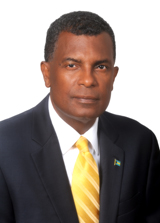
Fred Mitchell MP
On
Select Committee Request to review the allowances, benefits etc. of MPs and
Senators and to the construction of a Parliamentary complex.
House
of Assembly
6th
February 2013
I am privileged to be able to lead this debate.
It is yet another in a list of matters which I have been
fighting for since I got to this place and which as time is winding down, is on
my list to get done. It’s now or never.
This like everything else is going to be
contentious. That is our system. But the problem has to be faced despite which
is likely to be a heavy political and personal cost. It must be done so that the next generation
of people who come here will not have this battle to fight. Hopefully, and if we are artful and
determined enough, we will have designed when we have finished a system which
will give flexibility to the next set of leaders of this country to determine
the proper level of support for the work of Members of Parliament and Senators
who come to serve in office.
The idea is to put in place a system which will allow
for constant review in a transparent and objective context, on a regular basis
so that the work of a Member of Parliament or a Senator is properly supported.
Mr. Speaker, I made some personal choices in my own life
before coming to this job. I would be a
single man, without a family and I did this so that I could be totally and
absolutely dedicated to the one and only thing that I have always wanted to do. It took me a long time to get here, fighting
disabilities, real or imagined, prejudice and hatred but along the way some
great experiences of friendship, mentorship, loyalty and trust. I do not believe that this is a dirty
business.
In fact, I say that to those who nay say politics and
public service, that it is no more dirty than any other public activity in
which we are all engaged. I have tried
to dedicate my mature adult life to encouraging other young people to come to
public service. And to try to work for a
tolerant, liberal society. Remembering
always that this is a secular state, not a theocracy and that we must work for
the public good and in the public interest.
I have said to my family that when Pope John Paul II
died he left only his Bible to his sister.
I believe that may have been his only material property. I have not been
called to such a higher purpose but my own decision is to exhaust all that is
material in the greater interest of this country and leave not the material but
a legacy of goodwill and a record of public service which can be emulated.
But that is a personal decision, deeply personal. It is not a stricture to be imposed on anyone
else nor to be recommended. For coming to public service, although a vocation
or calling is a job; a highly visible job but a job nonetheless. And for doing
that job, you should be paid commensurate to the work you are expected to do,
for the risks which you are called upon to accept, and to be supported in that
work by the resources of the state. What you bring to the table as an MP or
Senator is your mind, talents, your intellect and intelligence to solve the
great problems which confront the country as well as the minutia and nuts of
bolts of the business of government and legislation.
I have been around now as Parliamentarian since
1992. Before that I served in various
capacities.
In 1977, there was a debate in this House when the late
Sir Lynden Pindling was seeking to put in place the salaries for
Parliamentarians and Ministers and other officers of the state.
The then Mr. Pindling said to the House that the
salaries were being put in place to make
it possible for men and women of modest means to run for office and to serve in
office.
This has always stuck with me. I came to this job against the backdrop of my
late first cousin once removed Sammie Isaacs who was almost consumed by the
financial losses which he encountered as a Member of the House of Assembly. My
mother always warned me not to do it because you end up backing notes for
constituents who would never pay you back.
So the last generation put in place some things: the
salaries, the pension, the constituency allowances.
Unfortunately, none of them are adequate neither do they
support fully the work which MPs and Senators are called upon to do.
The Opposition almost never agrees to support any
measures to move the process along. It
is easy to simply argue that people are seeking to fix themselves up. But I say
that this is a matter of such importance to the future of the country and its
ability to attract people of quality to service here that it must be fixed and
I am prepared to take the hit for it and the risk for it because I am nearer
the end than at the beginning.
This is not an exercise about salaries. I want to make
that clear. There is a mechanism to deal with that and even though the
Committee, if granted, may make passing references to it, this is more about
the supporting structures which MPs and Senators have. I commend to the
government that there should be a similar committee of the Senate and that the
two bodies work together to review these matters quickly and report back at the
earliest opportunity.
I hope that we get a unanimous report but I am prepared
to proceed if the majority alone is willing to proceed. It must be done.
This is also about suggesting some fundamental changes
in the way the House and Senate, the Parliament or legislative branch is funded
and administered.
I have had the advantage of reading this morning the
views of the Honourable Clerk of the House and I would wish to read into the
record those views with which I fully agree and commend to the House.
There is a need to de link the Parliament, its funding
and work from the Executive. The business, administration and funding of the
House is presently done through the Cabinet office. The Cabinet office can
properly be the link between the two bodies - the Executive and the Legislative
- but the House and the Senate should run their own affairs.
The Speaker should be and the President should be
corporation soles with the property of the House and Senate vested in those
respective corporations.
We have to look to the constitutional consequences of
this if any but I do not think that there are any. There is an opinion however
that there might be. The committee can investigate this.
The House and the Senate will be run by the respective
committees of the House, let us say we call it the Administrative Committee
which will be a standing committee of the House. The Committee will be chaired
by the Speaker or President as the case
might be and made up of three members of the majority and two members of the
minority. They will make the decisions
for the day to day running of the House, be responsible for relations with the
executive and the House and Senate and negotiate the annual budget of the
House.
My suggestion is that the House and Senate will then be
responsible for the administration of all matters which affect the emoluments,
allowances and benefits of the House.
The Parliament would be responsible for the
administration of the following acts:
The Parliamentarians (Constituency Office) Allowance
Act; the Parliamentarians ( Salaries an Allowances) Act; The Parliamentary Pensions Act; the Powers
and Privileges ( Senate and House of Assemby) Act. Those acts together
with the Prime Minister’s Pension
Act; the Prime Ministers Personal Staff
Act; the Public Disclosure Act and the Constitution will have to be reviewed by
the Committee.
I have some suggestions. Pensions for example ought to
be reviewed regularly and members ought to know what the status of their
pension is, how they can improve the worth of the pension. It is a contributory
pension and the value of it might be improved by allowance purchases of
additional benefits. When a Member or a
senator retires, it is the House or Senate that should provide the services to
that member to ensure that he is properly treated and deal with such items as
support for health care.
Further, it is my view that when you become a Member of
Parliament or a Senator you are an MP for the whole Bahamas and so your work
and travel throughout The Bahamas ought to be supported.
I wish now to turn to the idea of the construction of a
new Parliament.
This is long overdue. There were drawings done before
and a site chosen at old Victoria Hotel site up the street from this place but
the project was never completed. A new
complex was I think announced on the occasion of the visit of Princess Anne to
The Bahamas for the occasion of the 250th anniversary of the
founding of the Parliament but we are still in this building. The Parliament
first convened on September 29, 1729.
I do not like to work in this building. It is cramped. It is inadequate. It is too intimate and too accessible.
It has long ago outlived its adequacy.
I think that here is where it would be appropriate for
me to read into the record the views of our clerk with which I agree.
(here read into the record the piece from the Clerk of
the House)
I wish therefore Mr. Speaker to commend this resolution
to the House and the Committee I hope if it is approved can begin its work
right away and report expeditiously to the House. I believe that it would be
useful to travel to Barbados, Jamaica, Trinidad and Antigua as well as to
Canada and to the UK with a view to learning from their experiences and if not
travel to get access to information on what they have done.
I so move.